Twelfth Night shows a female character who masquerades as a man:
Imogen Stubbs as Viola/Cesario
http://www.youtube.com/watch?v=F8DGoF0CQlU&feature=related
Helen Hunt as Viola in Twelfth Night - begin at 1:46
http://www.youtube.com/watch?v=FG8U_iUo4mY
Friday, April 13, 2012

Beatrice
Monologue illuminates her character - Emma Thompson in Much Ado, 1993
http://www.youtube.com/watch?v=zl0lBHti99A&feature=fvsr
Dialogue illuminates further, with Benedick as foil - Thompson and Kenneth Branagh in Much Ado
http://www.youtube.com/watch?v=sf_UK4axr_E
http://www.youtube.com/watch?v=zl0lBHti99A&feature=fvsr
Dialogue illuminates further, with Benedick as foil - Thompson and Kenneth Branagh in Much Ado
http://www.youtube.com/watch?v=sf_UK4axr_E
Shakespeare's People
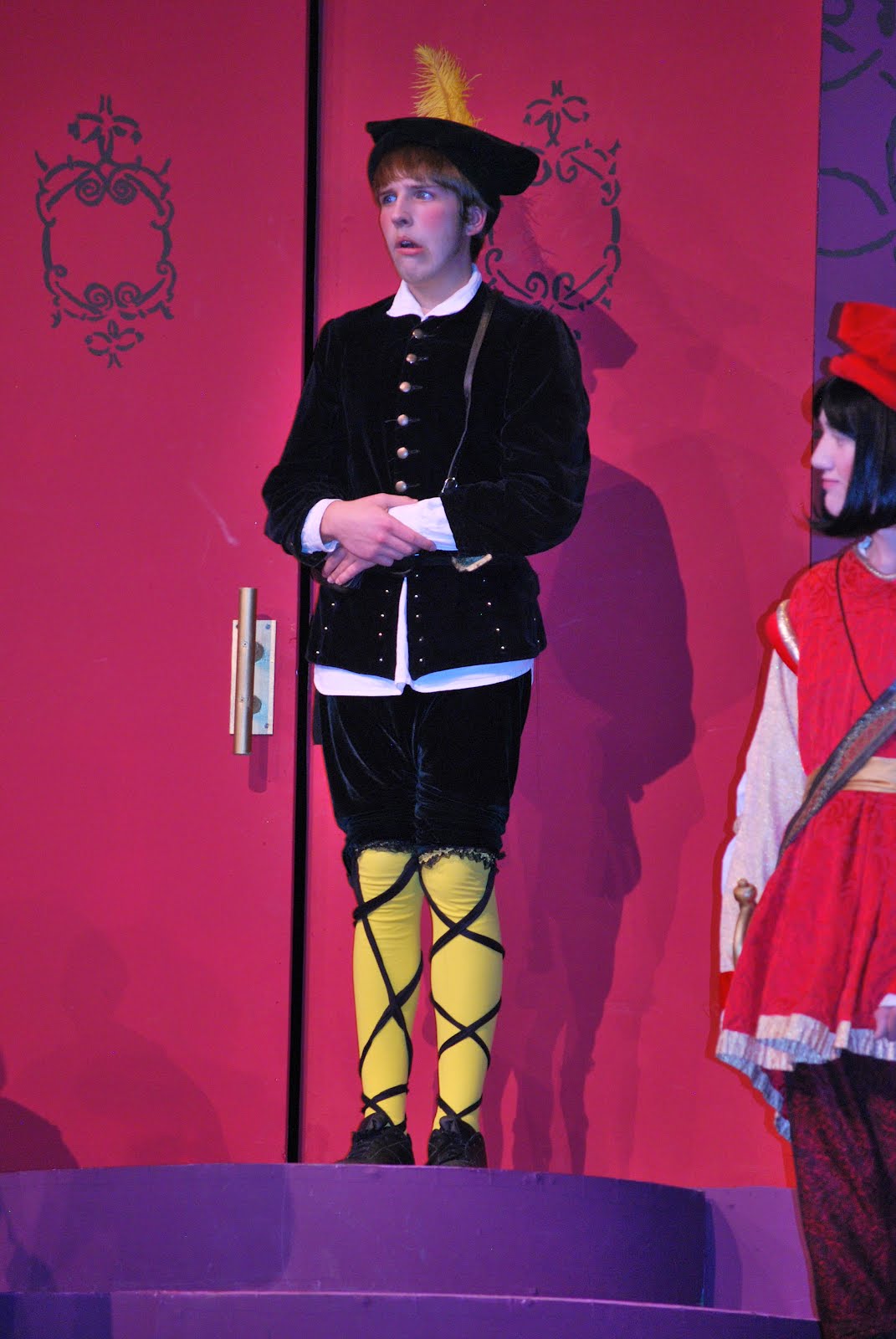
Items for today's lecture:
Henry V 1989- Branagh
http://www.youtube.com/watch?v=OAvmLDkAgAM
Henry V - 1944 - Olivier - note clanking of armour
http://www.youtube.com/watch?v=P9fa3HFR02E&feature=results_video&playnext=1&list=PLE2005B7B5FAB8586
Renaissance Man - Gregory Hines, Lillo Brancato, Danny DeVito 1994
http://www.youtube.com/watch?v=luqr-UX_oSM&feature=related
***********
Polonius
1990 - Iam Holm, Nathaniel Parker, Helena Bonham Carter
http://www.youtube.com/watch?v=SfV1DneGttI
2000 - Bill Murray, Liev Shreiber, Julia Stiles
http://www.youtube.com/watch?v=sXS2esgBvxQ&feature=BFa&list=PL8647C39F55D6D68C&lf=results_main
Gilligan's Island - Alan Hale Jr, Dawn Wells, Bob Denver, Tina Louise, Jim Backus 1964-7
http://www.youtube.com/watch?v=bXId5jOTxdg&feature=BFa&list=PL8647C39F55D6D68C&lf=results_main
This Is Hamlet - Howard Swain, Nicholas Pelczar, Anna Bullard - Stanford University 2010d
http://www.youtube.com/watch?v=jjLmGklbFxo&feature=autoplay&list=PL8647C39F55D6D68C&lf=results_main&playnext=1
Richard III
Ian McKellen, Maggie Smith 1995
http://www.youtube.com/watch?v=DsGGjXZw1eQ&feature=related
Kevin Spacey
http://www.youtube.com/watch?v=y1eoBTTFqbo&feature=related
Craig Ferguson
http://www.youtube.com/watch?v=OLTvvwXaUno&feature=related
Goodbye Girl - Richard Dreyfuss, Paul Benedict
http://www.tcm.com/mediaroom/video/474365/Goodbye-Girl-The-Movie-Clip-Don-t-Give-Me-Bette-Midler.html
*************
Shylock
Anthony Heald OSF
http://www.youtube.com/watch?v=i75gRqoXezM
Wednesday, February 8, 2012
Ring Lardner, Jr. Oral History Interview
Here is the first of six segments of a lengthy interview with one of the Hollywood Ten.
You can go to youtube for the remaining segments.
You can go to youtube for the remaining segments.
Wednesday, February 1, 2012


Arthur Miller - The Crucible
| The Crucible | |
|---|---|
 | |
| Written by | Arthur Miller |
| Characters | Abigail Williams Reverend John Hale Reverend Samuel Parris John Proctor Elizabeth Proctor Thomas Danforth Mary Warren John Hathorne Giles Corey |
| Date premiered | January 22, 1953 |
| Place premiered | Martin Beck Theatre, New York City |
| Original language | English |
| Subject | Salem witch trials, McCarthyism |
| Genre | Tragedy, drama |
| Setting | Salem, Massachusetts |
| IBDB profile | |
Student made trailer for film version
Zero Mostel by Jim Brochu "Zero Hour"
From the play "Zero Hour" written and performed by Jim Brochu, famed actor Zero Mostel talks about the Hollywood Blacklist and the House Unamerican Activities Committee, and about "Loose Lips," Jerome Robbins who gave names.
Wednesday, January 25, 2012
Alvah Bessie
Bessie held strong left-wing views and joined the International Brigades during the Spanish Civil War fought alongside Robert Merriman, David Doran, Leonard Lamb, Joe Bianca and Edwin Rolfe, who he described as being "frail; he resembled a bird; he had a fine, delicate bone structure and he did not look as though he should be in an army... I do not think I have ever met a gentler guy, a less pugnacious guy, less of a soldier. But he had the iron of conviction in him just the same. He had a tiny automatic pistol some one had given him, and it became him, though I could not imagine him ever using it."
While in Spain he was interviewed by journalists, Ernst Toller, Ernest Hemingway, Vincent Sheean and Herbert Matthews. Bessie took part in the battle for Gandesa and served under Milton Wolff at the Ebro. On his return he wrote a book, Men in Battle (1939) about his experiences in Spain. He was also appointed as drama and film reviewer of the New Masses (1939-43).
Bessie moved to Hollywood and two of his screenplays were produced by Warner Brothers, Northern Pursuit (1943) and The Very Thought of You (1944). His next screenplay, the extremely patriotic, Objective Burma (1945) was nominated for an Academy Award. This was followed by Hotel Berlin (1945), Ruthless (1948) and Smart Woman (1948).
1943 Northern Pursuit (screenplay)
Ring Lardner, Jr.
Film Clip: Woman of the Year 1942
Blacklisted by the Hollywood studios, Lardner worked for the next couple of years on the novel, The Ecstasy of Owen Muir (1954). He moved to England for a time where he wrote under several pseudonyms for television series such as The Adventures of Robin Hood. The blacklist was lifted when producer Martin Ransohoff and director Norman Jewison gave him screen credit for writing 1965's The Cincinnati Kid. Lardner's later work included M*A*S*H (1970), for which he won the Academy Award for Writing Adapted Screenplay, and The Greatest (1977). His final film project was an adaptation of Roger Kahn's classic book, "The Boys of Summer." To Ring's great regret, funding did not materialize.
According to Hungarian writer Miklos Vamos—who visited Lardner several times before his death—Lardner won an Academy Award for a movie he wrote under a pseudonym. Lardner refused to tell which movie it was, saying that it would be unfair to reveal it because the writer who allowed Lardner, Jr., to use his name as a front(as Lardner's pseudonym) was doing him a big favor at the time.
Howard Biberman
Howard Biberman
Film Trailer: Salt of the Earth http://www.youtube.com/watch?v=fDe80G96K1Q
Film Trailer: Salt of the Earth http://www.youtube.com/watch?v=fDe80G96K1Q
Biberman and his fellow Ten went to jail over their contempt convictions, Biberman for six months. Edward Dmytryk ultimately cooperated with the House committee, but Biberman and the others were blacklisted by official Hollywood movie studio bosses.
Biberman went to work independently after his release from jail. The result was Salt of the Earth, a fictionalized account of the Grant County miners' strike written by Michael Wilson and produced by Paul Jarrico, neither of whom were members of the Ten but both of whom were also blacklisted. Biberman died in New York City.
Salt of the Earth has been deemed "culturally significant" by the United States Library of Congress and selected for preservation in the National Film Registry. The film has also been preserved by the Museum of Modern Art in New York. Wilson, one of the blacklisted screenwriters who worked under assumed names, later won an Academy Award for a screenplay he wrote under a nom de plume, Bridge on the River Kwai.
Edward Dmytryk
Give us this Day
http://www.youtube.com/watch?v=dpSQ0Ha1Gh8
Tender Comrade
http://www.youtube.com/watch?v=L1Nzz8NSDbI
Summoned to appear before the House Committee on Un-American Activities (HUAC), he refused to cooperate and was sent to jail. After spending several months behind bars, Dmytryk made the decision to testify again, and give the names of his fellow members in the American Communist Party as the HUAC had demanded. On April 25, 1951, Dmytryk appeared before HUAC for the second time, answering all questions. He spoke of his own Party past, a very brief membership in 1945, including the naming of twenty-six former members of left-wing groups. He explained how John Howard Lawson, Adrian Scott, Albert Maltz and others had pressured him to include communist propaganda in his films. His testimony damaged several court cases that others of the so-called "Hollywood 10" had filed. He recounted his experiences of the period in his revealing 1996 book, Odd Man Out: A Memoir of the Hollywood Ten (Southern Illinois University Press, Carbondale, IL).
http://www.youtube.com/watch?v=dpSQ0Ha1Gh8
Tender Comrade
http://www.youtube.com/watch?v=L1Nzz8NSDbI
Summoned to appear before the House Committee on Un-American Activities (HUAC), he refused to cooperate and was sent to jail. After spending several months behind bars, Dmytryk made the decision to testify again, and give the names of his fellow members in the American Communist Party as the HUAC had demanded. On April 25, 1951, Dmytryk appeared before HUAC for the second time, answering all questions. He spoke of his own Party past, a very brief membership in 1945, including the naming of twenty-six former members of left-wing groups. He explained how John Howard Lawson, Adrian Scott, Albert Maltz and others had pressured him to include communist propaganda in his films. His testimony damaged several court cases that others of the so-called "Hollywood 10" had filed. He recounted his experiences of the period in his revealing 1996 book, Odd Man Out: A Memoir of the Hollywood Ten (Southern Illinois University Press, Carbondale, IL).
- The Hawk (1935)
- Million Dollar Legs (uncredited; 1939)
- Television Spy (1939)
- Emergency Squad (1940)
- Golden Gloves (1940)
- Mystery Sea Raider (1940)
- Her First Romance (1940)
- The Devil Commands (1941)
- Under Age (1941)
- Sweetheart of the Campus (1941)
- The Blonde from Singapore (1941)
- Secrets of the Lone Wolf (1941)
- Confessions of Boston Blackie (1941)
- Counter-Espionage (1942)
- Seven Miles from Alcatraz (1942)
- Hitler's Children (1943)
- The Falcon Strikes Back (1943)
- Captive Wild Woman (1943)
- Behind the Rising Sun (1943)
- Tender Comrade (1943)
- Murder, My Sweet (1944)
- Back to Bataan (1945)
- Cornered (1945)
- Till the End of Time (1946)
- So Well Remembered (1947)
- Crossfire (1947)
- Obsession (1949)
- Give Us This Day (1949)
- The Sniper (1952)
- Mutiny (1952)
- Eight Iron Men (1952)
- The Juggler (1953)
- The Caine Mutiny (1954)
- Broken Lance (1954)
- The End of the Affair (1954)
- Soldier of Fortune (1955)
- The Left Hand of God (1955)
- The Mountain (1956)
- Raintree County (1957)
- The Young Lions (1958)
- The Blue Angel (1959)
- Warlock (1959)
- Walk on the Wild Side (1962)
- The Reluctant Saint (1962)
- The Carpetbaggers (1964)
- Where Love Has Gone (1964)
- Mirage (1965)
- Alvarez Kelly (1966)
- Anzio (film) (1968)
- Shalako (1968)
- Bluebeard (1972)
John Howard Lawson
John Howard Lawson
Sahara: http://www.youtube.com/watch?v=WBMbxPZSZdQ&feature=related
Lawson appeared before the HUAC on October 29, 1947, but like Alvah Bessie, Herbert Biberman, Albert Maltz, Adrian Scott, Dalton Trumbo, Lester Cole, Edward Dmytryk, Samuel Ornitz and Ring Lardner Jr, he refused to answer any questions. Known as the Hollywood Ten, they claimed that the First Amendment of the United States Constitution gave them the right to do this. The HUAC and U.S. appeals courts, however, disagreed and all were found guilty of contempt of Congress and Lawson was sentenced to twelve months in Ashland Prison and fined $1,000. In his 1951 HUAC testimony, Edward Dmytryk testified that Lawson had pressured him to put communist propaganda in his films.
Lawson had organized and led the attack on Albert Maltz when Maltz published an article, "What Shall We Ask of Writers", in The New Masses, challenging the didacticism of the American Communist Party's censorship of writers. Surprised by the ferocity of attack from his fellow writers, including Lawson, Howard Fast, Alvah Bessie, Ring Lardner, Jr., Samuel Sillen, and others, Maltz publicly recanted.
Subscribe to:
Posts (Atom)


